1. Reducing Extra Scrap Caused by Pressure Fluctuations
During color change, the material viscosity, pressure drop across the filter screen, and screw conveying conditions all change. In traditional systems, these changes directly affect die pressure, causing output to fluctuate wildly and resulting in unstable product thickness, width, and surface finish.
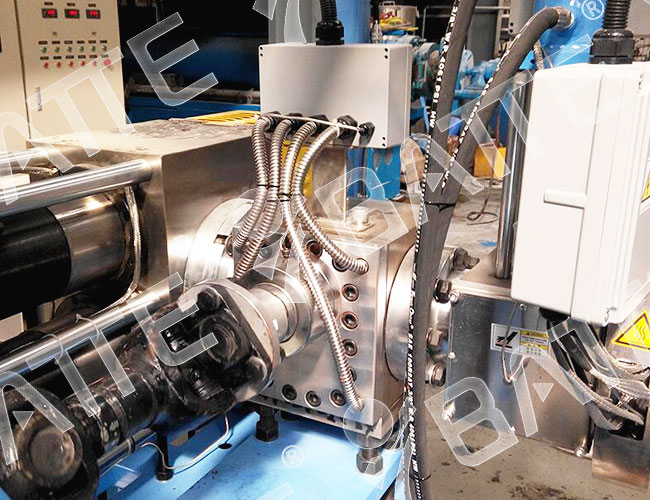
With the introduction of a melt pump—provided there is sufficient feed at the inlet and the pump type is appropriately matched to the operating conditions—the pump’s output maintains a consistent relationship with its rotational speed, significantly reducing pressure fluctuations at the die end. As a result, although purging is still required during the transition phase, significant pressure fluctuations no longer lead to the production of additional batches of products that fail dimensional specifications.
2. Shortening the Pressure Recovery Cycle
After a material change, the extruder must readjust to the viscosity and flow characteristics of the new material. In particular, when switching between different grades, filler systems, or masterbatch addition ratios, the extruder’s operating point shifts, and it often takes some time for pressure to return to a stable state.
A melt pump can partially decouple the stable output at the die end from the extruder’s fluctuations, allowing the production line to enter a controllable state more quickly. This is particularly important for production lines producing sheet, plate, cast film, and pipe products that require tight thickness tolerances.
3. Reducing Screen-Changing Disturbances by Integrating with a Screen Changer
Many production lines clean or replace screens simultaneously during material or color changes. If pressure fluctuations are too severe during the screen-changing process, it can easily lead to insufficient feed at the die, resulting in issues such as material shortages, thin walls, web breaks, and surface ripples in the finished products.
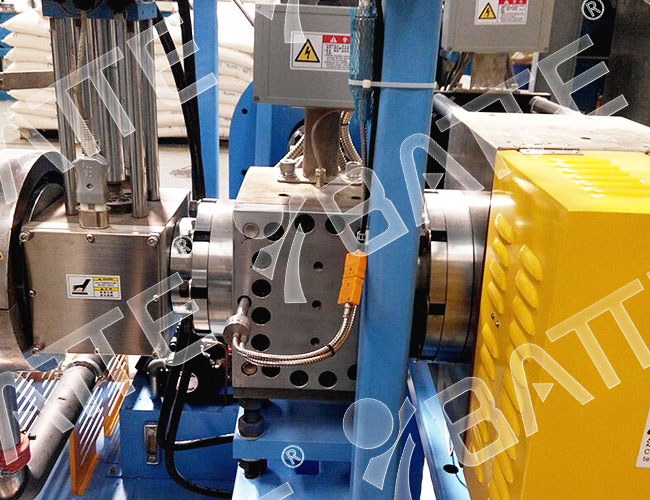
When a melt pump is used in conjunction with a continuous screen changer, the system can better buffer pressure fluctuations in the upstream filtration zone, thereby reducing the impact of screen changes on the die end. As noted in the documentation for BATTE melt filtration equipment, its screen changers are suitable for thermoplastic applications such as sheet, plate, pipe, profile, blown film, and pelletizing, and can be integrated with components like melt gear pumps, mixers, and start-up valves to provide complete turnkey solutions.
Email: sale@meltpump.com
WhatsApp: +86 158 3833 1071