The belt-type automatic screen changer (also known as a fully automatic belt-type screen-changing filter) is a high-end melt filtration device designed to enable continuous screen changes without stopping production. Primarily used for impurity filtration in extrusion production lines, its design completely eliminates pressure fluctuations during the screen-changing process, making it a core component of high-precision, long-run production.
Core Structure
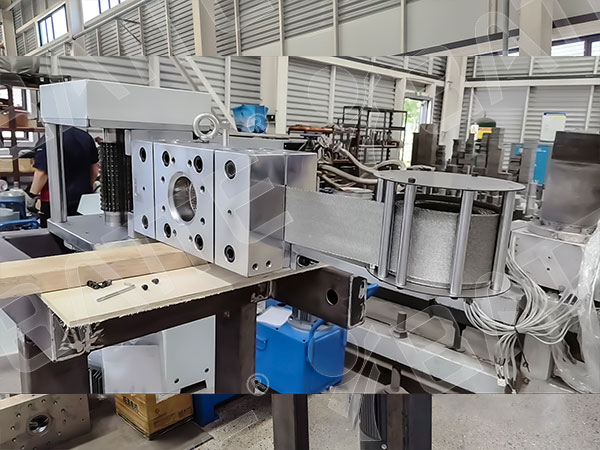
Composed of the filter housing, heating and cooling system, electrical control system, and a long mesh belt filter:
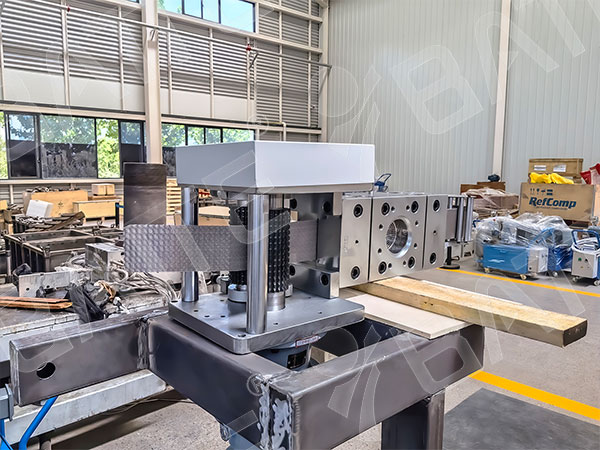
Core Filter Component: A mesh belt with a checkerboard pattern, woven from a special alloy that combines high strength with heat resistance. The filter belt length can be customized from 10 to 20 meters, with the longest option capable of supporting continuous production for up to 6 months without replacement.
Functional Modules: Includes inlet/outlet cooling sections, heating elements, and filter cartridge housings, with the entire process controlled automatically via the electrical control system.
Sealing Solution: Features a water-cooled sealing design that solidifies residual melt to form a sealing layer, effectively preventing material leakage.
Working Principle
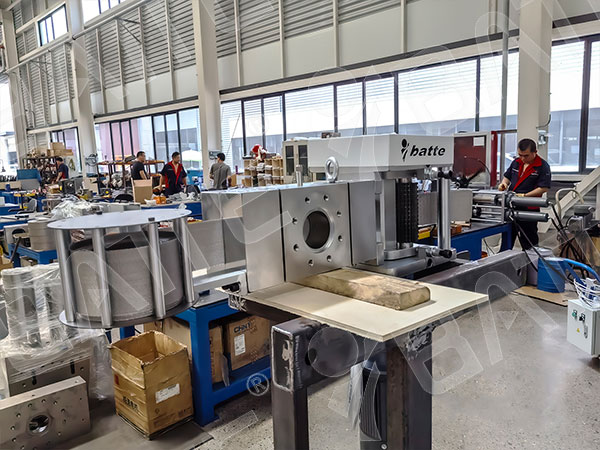
Leveraging automated control to enable continuous, uninterrupted production, the core process consists of five steps:
Dual-Condition Trigger: When the melt pressure at the feed inlet reaches a preset threshold due to screen clogging, or when the operation reaches a preset time interval, the control system automatically initiates the screen-changing procedure.
Heating and Softening: The heating elements at the outlet are activated to locally heat the melt, reducing its viscosity and minimizing resistance to belt movement.
Automatic Screen Movement: The screen belt is moved by the melt’s own pressure (or via a servo motor), pushing the old, contaminant-laden screen out of the filtration zone while simultaneously guiding the new screen into position.
Cooling and Sealing: Once the new screen is in place, the water-cooling system activates to rapidly cool and solidify the residual melt, forming a seal to prevent material leakage.
Standby Cycle: Once pressure returns to normal levels, the equipment resumes stable filtration and awaits the next screen change trigger.
Core Advantages
Uninterrupted Production: The entire screen change process requires no machine shutdown. Compared to traditional intermittent screen changes, this reduces unplanned downtime and significantly improves production efficiency.
Consistent Product Quality: There are no fluctuations in material flow pressure during the screen change process, eliminating issues such as product deformation or uneven thickness, and significantly improving quality consistency.
Energy Efficiency and Environmental Protection: The water-cooled seal reduces material leakage and waste, generates no scrap, and minimizes environmental pollution and raw material loss.
High Degree of Automation: The entire process requires no manual intervention, reducing the workload on operators and making it suitable for modern unmanned production lines.
Email: sale@meltpump.com
WhatsApp: +86 158 3833 1071