The melt gear pump has completely different functional positioning at different positions on the same production line: discharge relies on inlet filling, pressurization relies on pressure difference margin, and feeding relies on flow stability. Distinguishing the positioning of the pump is the only way to truly avoid selection errors and achieve the expected process for conveying, metering, and boosting.
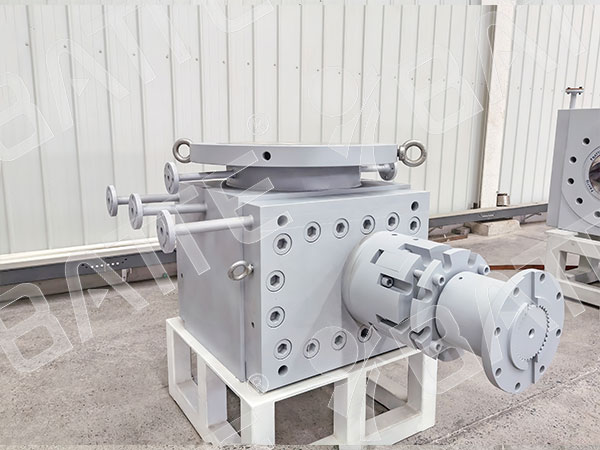
1、 Discharge process: Continuous and stable delivery of upstream melt
Typical application: Pump out the melted material after volatilization.
The melt gear pump receives polymer that has undergone devolatilization treatment and continuously transports the material to downstream pipelines or processing equipment. Whether the discharge is stable depends not only on the pump's conveying capacity, but also on whether the material can be smoothly filled into the pump chamber.
When the inlet pressure is low, it is necessary to comprehensively evaluate the liquid level before the pump, the structure of the flow channel, and the fluidity of the melt to determine the filling effect of the tooth cavity. If the viscosity of the melt is high, the inlet resistance is high, or the upstream feeding state fluctuates, the filling of the interdental working chamber will be affected. In this case, simply increasing the pump speed will not result in a synchronous increase in actual production.
Core selection of discharge pump:
The entrance structure, installation method, and operating speed must be adapted to the upstream feeding state.
If it is a vacuum or low-pressure volatilization condition, it is necessary to separately verify the configuration based on the sealing structure and material characteristics.
2、 Pipeline pressurization process: Overcoming resistance and establishing the required pressure for the process
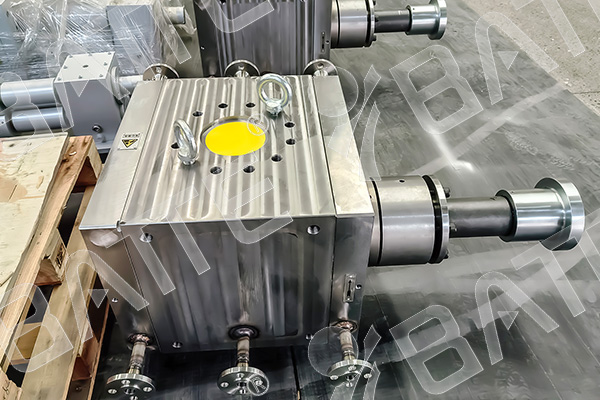
When the melt flows through pipelines, filters, and downstream equipment, it will generate flow resistance. The core function of the melt gear pump here is to push the melt to overcome the resistance of the entire line and complete the transportation according to the target flow rate.
The working pressure difference of the pump is determined by the downstream pipeline resistance and equipment back pressure demand, and then comprehensively calculated based on the inlet pressure. Once the pipeline layout, processing temperature, filter specifications, and downstream equipment are adjusted, the demand for boosting will change accordingly.
Especially for filters, as the trapped impurities continue to accumulate, the resistance will continue to rise. The selection should not be based solely on the low-pressure conditions of the new filter screen, but should reserve a margin for pressure fluctuations during the stage of filter screen blockage.
At the same time, it is necessary to evaluate whether the discharge and pressurization share the same pump or are separately configured with two pumps, which needs to be comprehensively judged based on the feeding conditions and pressure requirements of each section.
3、 Feeding downstream processes: precise and controllable, stable conveying flow
Continuous production, the core is the matching of upstream and downstream production capacity. Under the premise of good filling of the melt and appropriate viscosity and pressure difference of the melt, the melt gear pump can achieve control of the conveying volume by adjusting the speed.
In theory, the flow rate is calculated based on the pump displacement and speed, but the actual output flow rate is affected by factors such as tooth cavity filling rate, pump leakage, and material conditions. At the same rotational speed, changes in temperature and pressure may result in deviations in the actual discharge volume.
When used for stable feeding measurement, it is necessary to confirm the continuity of upstream feeding, downstream acceptance capacity, and verify the flow stability under all operating conditions. If the production line adopts quality flow control, it is necessary to clarify the flow detection plan; If converting volumetric flow rate to mass flow rate, the melt density at the corresponding temperature must be used for calculation.
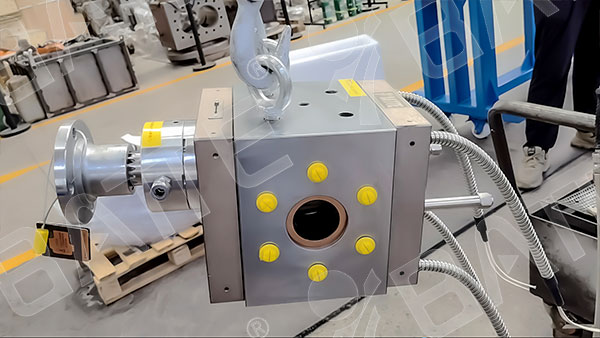
Discharge pump: Focus on inlet filling to ensure continuous feeding under low pressure/vacuum environment;
Boosting pump: Focus on the pressure difference margin and deal with filter blockage and changes in pipeline resistance;
Feed metering pump: Focus on flow stability, relying on speed adjustment to match upstream and downstream production capacity.
Distinguishing the positioning of the melt gear pump in the production line is necessary to avoid selection errors and achieve the expected process for metering, conveying, and pressurization.
Email: sale@meltpump.com
WhatsApp: +86 158 3833 1071